Why Video Marketing Gets Your Business Found on YouTube (The Second Largest Search Engine)
Most businesses treat YouTube like a social media platform. They post videos, hope for views, and call it a day. But here’s what they’re missing: YouTube is the second largest search engine in the world, owned by Google. And every video you post gets indexed by Google and keeps showing up in search results for months.
If you’re not using video as part of your local business marketing strategy, you’re leaving customers on the table.
Why YouTube Matters for Local Businesses
YouTube has over 2.5 billion monthly active users, with people watching more than 1 billion hours of video every single day. But here’s the stat that matters for local businesses: 68% of consumers say they watch videos to learn about new products or services.
Your customers are searching YouTube for answers. They’re typing “how to fix [problem],” “best [service] near me,” and “[product] review.” And if your video shows up, you’ve got their attention.
Here’s what most businesses get wrong: They post random videos with no strategy. No keyword research. No optimization. No consistency.
Our Ad Rotation System includes daily video posts across YouTube, TikTok, Instagram, Facebook, and Pinterest. But even if you’re doing it yourself, here’s what you need to know.
Step 1: Treat YouTube Like a Search Engine
YouTube is a search engine first and a social platform second. The algorithm rewards videos that match what people are searching for. Here’s what that means for you:
Do keyword research. What are your customers actually typing into the search bar? Use YouTube’s autocomplete feature—start typing “[your service]” and see what pops up. That’s what people are searching for.
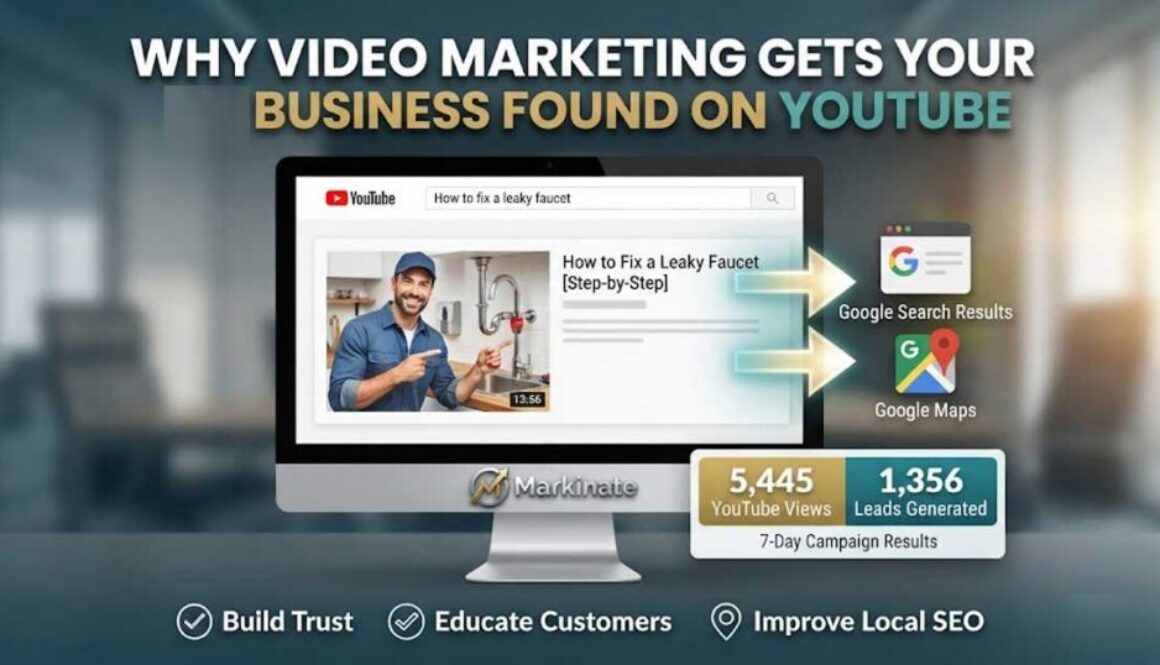
Put keywords in your title. Your title is the first thing people see. Make it clear, descriptive, and include your primary keyword. For example, instead of “Plumbing Tips,” try “How to Fix a Leaky Faucet [Step-by-Step].”
Write a full description. YouTube reads your video description to understand what your video is about. Write at least 200 words that include your keywords naturally. Think of it as a mini blog post.
Use tags. Tags help YouTube categorize your video. Include your primary keyword, related terms, and location if you’re a local business.
Learn why each platform matters for your business visibility.
Step 2: Create Videos That Educate, Build Trust, and Get Found
The best videos for local businesses are educational, trustworthy, and search-friendly. Here are three types that work:
1. How-to Videos
Answer the questions your customers are already asking. “How do I…” “What’s the best way to…” “Why is…” These videos position you as the expert and build trust before someone ever calls you.
2. Behind-the-Scenes
Show your team, your process, and your culture. People buy from people. Videos that show the human side of your business build emotional connection.
3. Customer Testimonials
Nothing builds trust like a happy customer telling their story. Record short videos with your best customers and post them.
The golden rule: Every video should answer a question, solve a problem, or provide value. If it doesn’t, don’t post it.
See how we create video ads that get indexed by Google.
Step 3: Optimize Every Video for Search
Posting videos without optimization is like putting up a billboard in the desert. Here’s how to make sure people find yours:
Thumbnail matters. Your thumbnail is the first thing people see. Use a clear, high-quality image with readable text overlay. Contrast is your friend—bright colors stand out.
First 15 seconds are everything. This is when people decide whether to keep watching. Hook them immediately. State the problem, offer a solution, or ask a question.
Use cards and end screens. Cards appear as clickable suggestions during your video. End screens appear at the end. Use both to direct viewers to your website, other videos, or playlist.
Add subtitles. YouTube can auto-generate them, but they’re often inaccurate. If you can, upload your own .srt file. It helps with accessibility and search.
Create playlists. Group related videos into playlists. YouTube recommends playlists more often than individual videos, and they keep people watching longer.
Learn more about how we create and schedule video content.
Step 4: Consistency Over Perfection
You don’t need a Hollywood production studio to succeed on YouTube. You need consistency.
Post on a schedule. Whether it’s once a week or three times a week, stick to it. YouTube rewards consistency with better visibility in search results.
Batch your content. Record multiple videos in one session. It saves time and ensures you always have content ready.
Don’t obsess over quality. Good audio and clear visuals matter. But a simple video recorded on your phone can outperform a polished production if it provides value.
Remember: Every video you post becomes a permanent asset that people find for years. Google indexes every video, so your content keeps working long after it’s posted.
View our packages that include daily video posts across all platforms.
Step 5: Cross-Promote Your Videos
Your YouTube videos shouldn’t just live on YouTube. Here’s where else you should share them:
Post to Google Business Profile. Google Business Profile posts that include video get more engagement. Share your best videos directly on your GBP.
Share on Facebook and Instagram. Both platforms support video and are indexed by Google, so your content shows up in search results too.
Post to TikTok. Short-form videos from your longer content work great on TikTok. It reaches new audiences and drives traffic back to your YouTube channel.
Create Pinterest video pins. Every video pin builds a backlink to your website, boosting your domain authority and improving your SEO over time.
See why each platform matters for full coverage.
What Real Results Look Like
Here’s what happens when you treat YouTube like a search engine and post consistently:
In a recent 7-day campaign for a local business, our search-driven content generated 5,445 YouTube views from just 12 posts. That’s over 450 views per post—with zero ad spend.
Those views came from people actively searching for solutions. And because every video is indexed by Google, those videos will keep generating views and leads for months.
See real results from our clients.
Getting Started: Your Next Steps
DIY Option:
Create a YouTube channel for your business
Research keywords your customers are searching for
Plan your first 5 videos (how-tos, behind-the-scenes, testimonials)
Optimize each video with keywords in the title, description, and tags
Post on a consistent schedule
Share your videos across all your platforms
Done-For-You Option:
We create and post video ads daily on YouTube, TikTok, Instagram, Facebook, and Pinterest. Every video is optimized around high-intent search terms and gets indexed by Google. We handle the research, creation, posting, and reporting—so you never have to think about it.
Find the right package for your business.
The Bottom Line
YouTube is too powerful to ignore. Your customers are searching for answers every day. If your videos aren’t showing up, they’re finding your competitors instead.
Start with one video. Then another. Then another. Consistency builds momentum. Momentum builds authority. And authority builds trust.
Ready to get found?
Call us at (760) 428-0591
Or claim your free samples—one Google Business Profile post, one video ad, and one image ad—customized to your business.
Claim Your Free Samples Today.